Search Engine Optimization (SEO) is one of the most effective ways to increase your website’s visibility and attract organic traffic. While off-page SEO focuses on backlinks and authority, on-page SEO ensures that every page on your website is optimized for both search engines and users.
A well-optimized webpage not only ranks higher on Google but also provides a better user experience, resulting in increased engagement and conversions. This complete on-page SEO checklist covers the essential elements every website owner, blogger, and digital marketer should implement.
Why On-Page SEO Matters
On-page SEO helps search engines understand your content while making it easier for users to navigate your website. Proper optimization improves search rankings, increases click-through rates (CTR), and boosts organic traffic.
Whether you’re publishing a blog, creating a landing page, or managing an eCommerce website, following an on-page SEO checklist ensures your content is fully optimized before publishing.
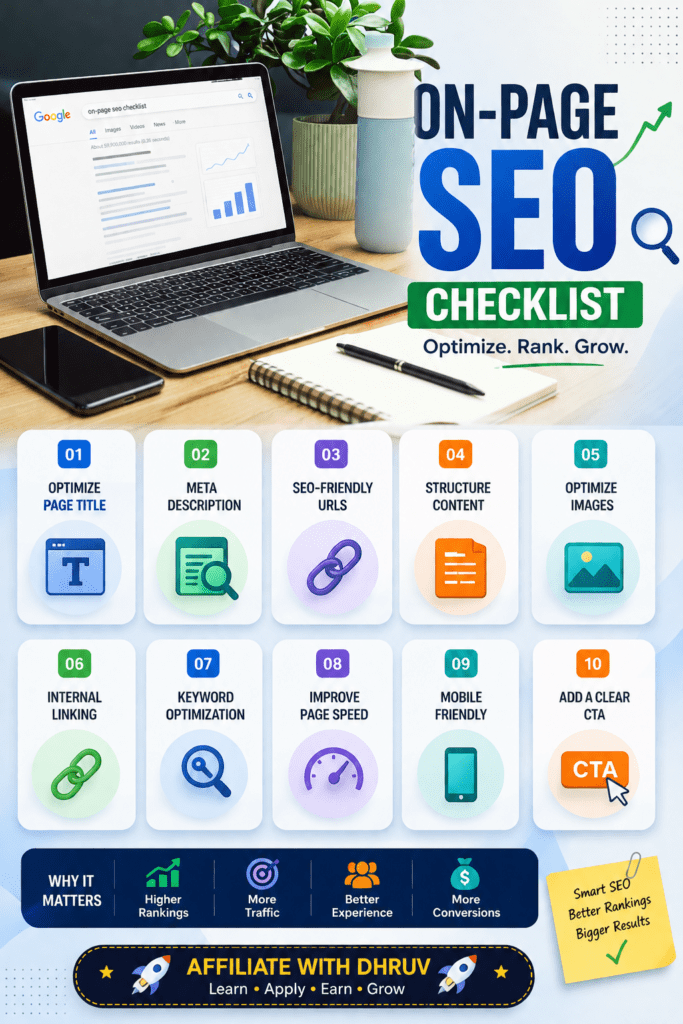
Essential On-Page SEO Checklist
1. Optimize Your Page Title
Your page title is one of the first things users and search engines notice. Include your primary keyword naturally and keep the title between 50–60 characters for better visibility in search results.
2. Write an Engaging Meta Description
A compelling meta description encourages users to click your page. Keep it around 150–160 characters and include your focus keyword while clearly explaining what readers will learn.
3. Use SEO-Friendly URLs
Create short, descriptive URLs that include your primary keyword. Avoid unnecessary numbers, symbols, or long strings of text.
Example:yourwebsite.com/on-page-seo-checklist
4. Structure Your Content Properly
Use one H1 heading for the main title, followed by well-organized H2 and H3 headings. This improves readability and helps search engines understand your content structure.
5. Optimize Images
Compress images to improve page speed and add descriptive alt text containing relevant keywords. Properly optimized images can also appear in Google Image Search.
6. Internal Linking
Link to related articles and pages on your website. Internal links help users discover more content while improving website navigation and SEO.
7. Use Keywords Naturally
Include your primary keyword in the title, introduction, headings, URL, meta description, and conclusion. Avoid keyword stuffing, as it can negatively impact rankings.
8. Improve Page Speed
Fast-loading websites provide a better user experience and rank higher in search results. Optimize images, enable caching, and reduce unnecessary scripts to improve performance.
9. Make Your Website Mobile-Friendly
Most users browse websites on mobile devices. Ensure your website is responsive, loads quickly, and provides a seamless experience across all screen sizes.
10. Add a Clear Call-to-Action (CTA)
Guide visitors toward the next step with a clear CTA such as Download the Checklist, Read More, Contact Us, or Subscribe.
Final Thoughts
On-page SEO is the foundation of every successful SEO strategy. By optimizing titles, meta descriptions, headings, URLs, images, internal links, and page speed, you improve both search engine rankings and user experience.
Remember that SEO is an ongoing process. Regularly review your content, update outdated information, and monitor performance using tools like Google Search Console and Google Analytics. Following this on-page SEO checklist will help your website attract more organic traffic and achieve long-term growth.
Frequently Asked Questions (FAQs)
1. What is on-page SEO?
On-page SEO is the process of optimizing individual web pages by improving elements such as titles, headings, content, URLs, images, and internal links to achieve better search engine rankings.
2. Why is an on-page SEO checklist important?
An on-page SEO checklist ensures every important optimization step is completed before publishing, helping improve rankings, user experience, and organic traffic.
3. What are the most important on-page SEO factors?
Some of the most important factors include SEO-friendly titles, meta descriptions, keyword optimization, proper heading structure, internal links, image optimization, mobile responsiveness, and page speed.
4. How often should I update my on-page SEO?
You should review and update your pages regularly, especially when search engine algorithms change, new keywords become relevant, or your content becomes outdated.
5. Which tools can help with on-page SEO?
Popular on-page SEO tools include Google Search Console, Google Analytics, Yoast SEO, Rank Math, Ahrefs, Semrush, and Screaming Frog for optimization, performance tracking, and technical audits.