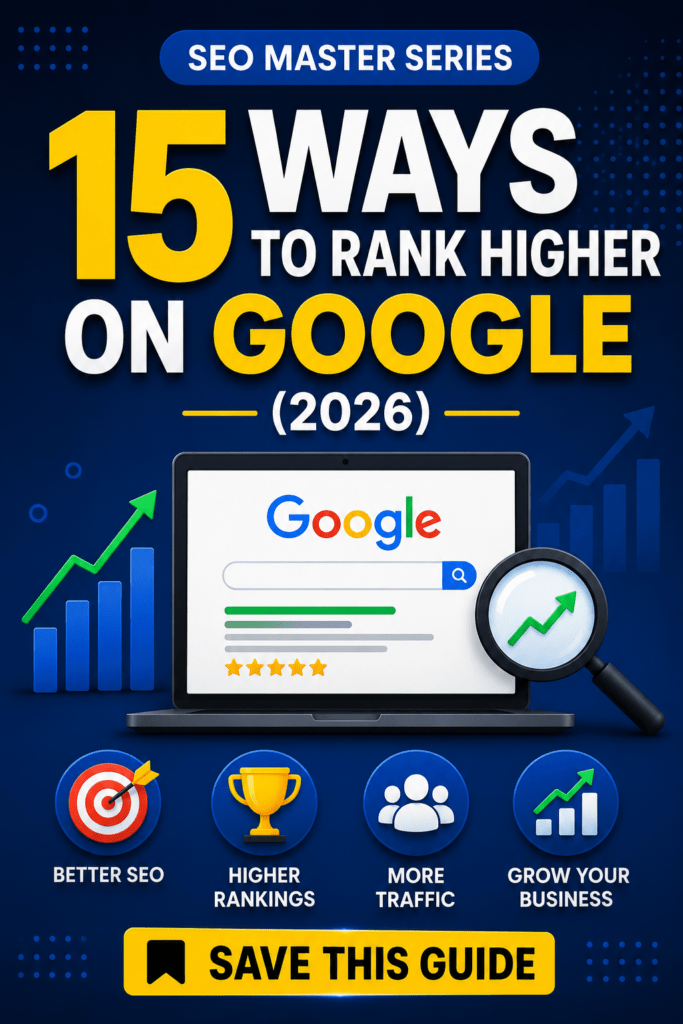
Ranking higher on Google is no longer about simply adding keywords to a webpage. Modern SEO focuses on search intent, helpful content, technical performance, user experience, and website authority. Whether you are building a new website or improving an existing one, these 15 practical strategies can help increase your search visibility and attract more organic traffic.
1. Target Search Intent
Understand what users actually want when they search for a keyword. Create content that directly satisfies their informational, commercial, navigational, or transactional intent.
2. Research Relevant Keywords
Choose keywords that are closely related to your business and audience. Focus on relevance, search intent, competition, and realistic ranking opportunities rather than search volume alone.
3. Create Helpful Content
Publish original, useful content that genuinely answers users’ questions. Strong content should provide clear information, practical examples, and meaningful value.
4. Optimize Page Titles
Write descriptive and compelling title tags that clearly communicate what each page is about. Include the primary keyword naturally where appropriate.
5. Write Better Meta Descriptions
Create concise meta descriptions that accurately summarize the page and encourage users to click. A strong description can help improve your organic click-through rate.
6. Use Clear H1 & H2 Headings
Organize your content with logical headings. A clear heading structure makes pages easier for users and search engines to understand.
7. Add Internal Links
Connect related pages using relevant internal links. This helps visitors discover more content while making it easier for search engines to understand your site’s structure.
8. Optimize Images
Compress images, use descriptive filenames, and add meaningful alt text. Proper image optimization can improve page performance and accessibility.
9. Improve Page Speed
A fast website provides a better user experience. Optimize large images, reduce unnecessary scripts, and improve technical performance to keep pages responsive.
10. Optimize for Mobile
Make sure your website works smoothly on smartphones and tablets. Mobile-friendly design is essential because many users access Google through mobile devices.
11. Build Quality Backlinks
Earn relevant backlinks from trustworthy websites through useful content, digital PR, partnerships, and genuine industry relationships. Focus on quality rather than collecting links in large quantities.
12. Improve User Experience
Make navigation simple, content readable, and important information easy to find. A positive experience helps visitors interact with your website more effectively.
13. Update Old Content
Review older articles regularly. Update outdated statistics, broken links, examples, screenshots, and information so your content remains accurate and useful.
14. Fix Technical SEO Issues
Check for crawlability problems, broken pages, indexing issues, duplicate content, poor URL structures, and other technical problems that can affect search visibility.
15. Track SEO Performance
Monitor organic traffic, rankings, impressions, clicks, conversions, and other meaningful metrics. Use the data to identify opportunities and continuously improve your SEO strategy.
Final Thoughts
Higher Google rankings come from consistent, user-focused optimization rather than a single SEO trick. Start with search intent and useful content, strengthen your on-page optimization, improve technical performance, build authority, and track your results. By applying these 15 strategies consistently, you can create a stronger SEO foundation and work toward sustainable organic growth in 2026.
FAQs
1. How can I rank higher on Google?
Focus on search intent, helpful content, relevant keywords, technical SEO, backlinks, mobile usability, and continuous performance tracking.
2. How long does SEO take to improve rankings?
SEO results vary by website, competition, content quality, and authority. Consistent optimization is usually more effective than expecting immediate results.
3. Are backlinks still important for SEO?
Yes. Relevant, trustworthy backlinks can help demonstrate authority, but they should be earned naturally through valuable content and legitimate promotion.
4. Why is page speed important for SEO?
Fast pages provide a better user experience and can support stronger overall website performance, especially on mobile devices.
5. Should I update old blog posts for SEO?
Yes. Updating outdated information, improving content quality, fixing links, and aligning articles with current search intent can make older content more useful.