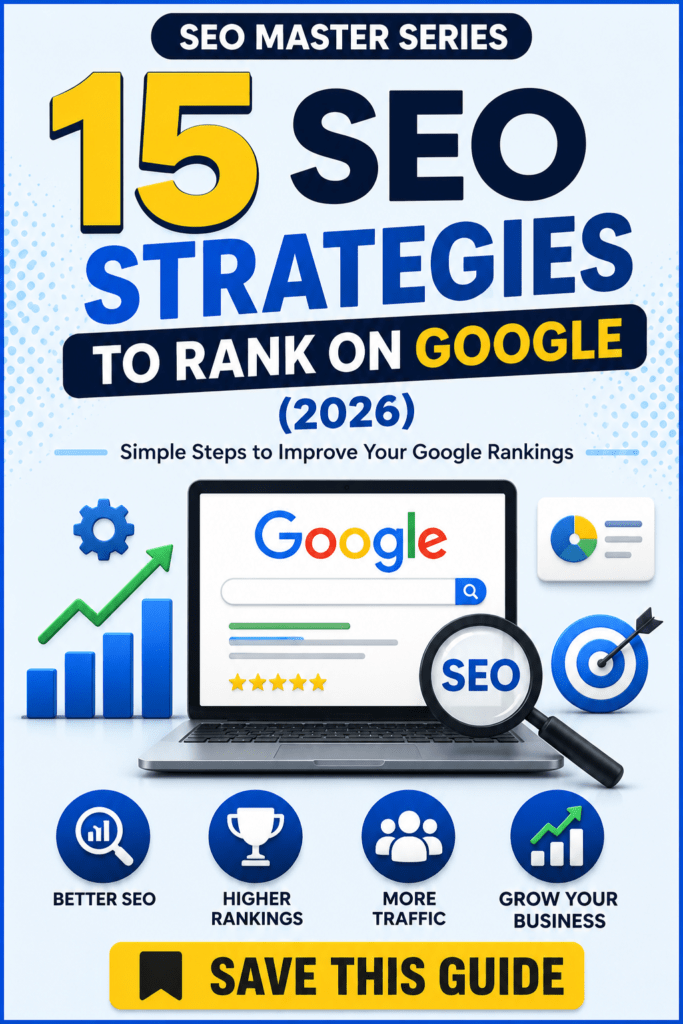
Ranking higher on Google is not about using a single SEO trick. It requires a consistent strategy that combines search intent, quality content, technical optimization, user experience, and performance tracking. Whether you are a beginner, blogger, small-business owner, or digital marketer, these 15 SEO strategies to rank on Google in 2026 can help improve your website’s search visibility and organic traffic.
1. Target Search Intent
Understand what users actually want when they search for a keyword. Create content that directly satisfies their informational, commercial, navigational, or transactional intent.
2. Research Relevant Keywords
Choose keywords that match your audience and business goals. Focus on relevant terms instead of targeting keywords only because they have high search volume.
3. Create Helpful Content
Publish original, useful, and well-structured content that answers real questions and provides practical value to readers.
4. Optimize Page Titles
Write clear and compelling SEO titles that accurately describe the page. Include the primary keyword naturally where appropriate.
5. Write Strong Meta Descriptions
Create concise meta descriptions that explain the value of your page and encourage users to click your result.
6. Use Clear H1 & H2 Headings
Organize your content with descriptive headings and subheadings. This improves readability and helps search engines understand the page structure.
7. Add Internal Links
Connect related pages using relevant internal links. This helps visitors discover more content and makes your website easier to navigate.
8. Optimize Images
Compress images to reduce loading time and use descriptive file names and useful alternative text where appropriate.
9. Improve Page Speed
A fast website provides a better user experience. Optimize images, reduce unnecessary scripts, and improve your website’s technical performance.
10. Optimize for Mobile
Make sure your website works smoothly on smartphones and tablets. A responsive, mobile-friendly design is essential for modern search visibility.
11. Build Quality Backlinks
Earn relevant backlinks from trustworthy websites by creating valuable resources, original research, useful guides, and shareable content.
12. Improve User Experience
Make your website easy to navigate. Use clear menus, readable typography, logical page layouts, and strong calls to action.
13. Update Old Content
Review older articles regularly. Update outdated information, improve sections, add relevant examples, and remove information that is no longer useful.
14. Fix Technical SEO Issues
Check for broken links, indexing problems, duplicate pages, crawlability issues, and other technical problems that may affect search visibility.
15. Track SEO Performance
Monitor organic traffic, keyword performance, clicks, impressions, and conversions. Use performance data to identify opportunities and continuously improve your strategy.
Final Thoughts
SEO is a long-term process rather than a quick shortcut. By combining keyword research, helpful content, on-page optimization, technical SEO, backlinks, mobile optimization, and performance tracking, you can build a stronger foundation for sustainable organic growth.
Start with the strategies that need the most attention on your website, measure the results, and gradually improve your SEO strategy. Consistency and quality are key to building long-term search visibility in 2026.
5 FAQs
1. What are the most important SEO strategies in 2026?
Some of the most important strategies include matching search intent, creating helpful content, optimizing pages, improving website speed, mobile optimization, internal linking, and monitoring SEO performance.
2. How long does SEO take to improve Google rankings?
SEO results vary depending on competition, website authority, content quality, and technical factors. Meaningful improvements often require consistent optimization over several months.
3. Are backlinks still important for SEO?
Yes. Relevant, high-quality backlinks can help demonstrate credibility and authority. Focus on earning natural links from reputable and relevant websites rather than building large numbers of low-quality links.
4. Why is search intent important for SEO?
Search intent helps you understand what users expect from a search query. Creating content that satisfies that intent can improve relevance, engagement, and the overall usefulness of your page.
5. How can beginners start improving SEO?
Start with keyword research, search intent, helpful content, SEO titles, headings, internal links, image optimization, mobile usability, and basic technical SEO. Then track your performance and improve continuously.