
Search engine optimization (SEO) is one of the most effective ways to grow organic website traffic. However, even the best websites can struggle to rank if they make common SEO mistakes. Google constantly updates its algorithms to reward websites that provide a great user experience and valuable content. Ignoring SEO best practices can lead to lower rankings, reduced traffic, and fewer conversions.
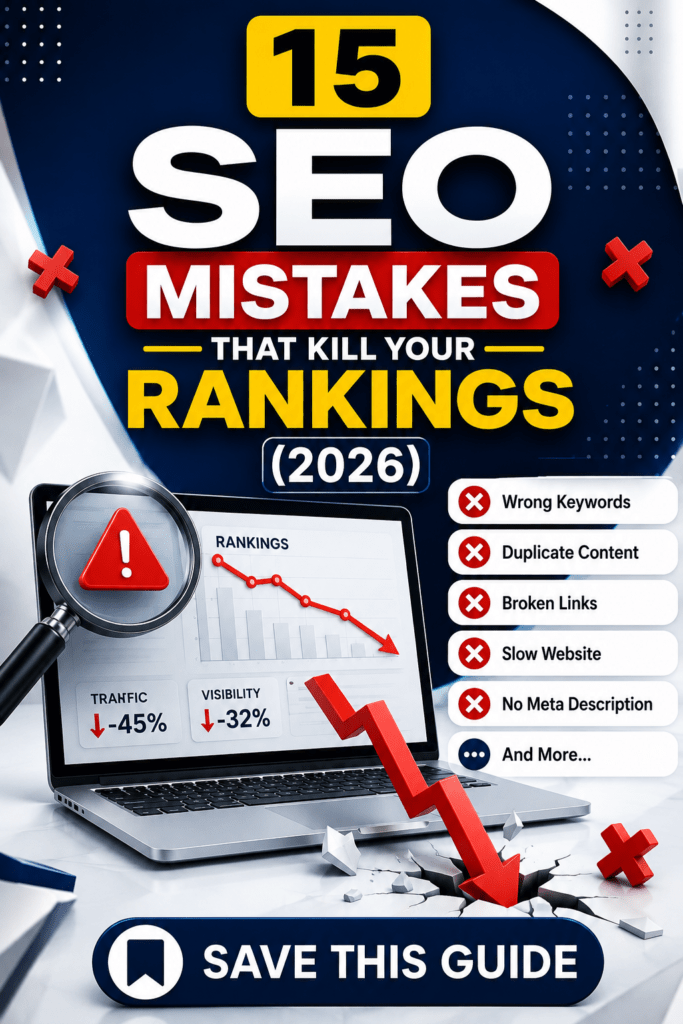
If you want your website to perform well in search results, it’s essential to avoid the most common SEO mistakes. Below are 15 critical errors that can negatively impact your rankings and practical ways to fix them.
The first mistake is targeting the wrong keywords. Choosing keywords with no search intent or targeting highly competitive terms can make it difficult to rank. Always conduct proper keyword research and focus on relevant, long-tail keywords.
Another major issue is keyword stuffing. Repeating the same keyword excessively makes content difficult to read and may trigger Google penalties. Use keywords naturally throughout your content.
Many websites also fail to optimize their title tags. Every page should have a unique, keyword-rich title that clearly explains the page’s purpose.
Duplicate content is another ranking killer. Copying content from other websites or repeating the same content across multiple pages confuses search engines. Create original, valuable content for every page.
Broken links create a poor user experience and reduce website credibility. Regularly audit your website and fix or remove broken links.
A slow-loading website can significantly increase bounce rates. Compress images, enable browser caching, use a CDN, and optimize your hosting to improve page speed.
Ignoring mobile SEO is a costly mistake. Since Google uses mobile-first indexing, your website must be responsive and easy to navigate on smartphones and tablets.
Many websites also forget to write compelling meta descriptions. While they don’t directly affect rankings, they improve click-through rates by encouraging users to visit your page.
Poor internal linking prevents search engines from understanding your website structure. Link related pages together to distribute authority and improve navigation.
Another overlooked factor is image SEO. Use descriptive file names, optimize image sizes, and write meaningful alt text for every image.
Failing to implement Schema Markup means missing opportunities for rich results like FAQs, ratings, and product information that increase visibility in search results.
Publishing thin content with little value rarely ranks well. Focus on creating comprehensive, informative, and engaging articles that fully answer users’ questions.
Websites without HTTPS security may lose user trust and rankings. Installing an SSL certificate protects user data and improves credibility.
Ignoring search intent is another common mistake. Your content should match what users actually expect when they search for a keyword—whether they want information, products, comparisons, or solutions.
Finally, many businesses never perform an SEO audit. Regular audits help identify technical issues, broken pages, indexing problems, and optimization opportunities before they affect rankings.
SEO success doesn’t come from shortcuts. It comes from consistently improving your website, publishing helpful content, and following Google’s best practices. Avoiding these 15 SEO mistakes will strengthen your website’s performance, increase organic traffic, and improve your chances of achieving higher Google rankings in 2026 and beyond.
5 Frequently Asked Questions (FAQs)
1. What is the biggest SEO mistake beginners make?
Targeting the wrong keywords and creating content without understanding search intent are among the most common beginner mistakes.
2. Does page speed affect Google rankings?
Yes. A fast-loading website improves user experience and is an important Google ranking factor.
3. Why is mobile SEO important?
Google primarily indexes the mobile version of websites, making mobile optimization essential for higher rankings.
4. How often should I perform an SEO audit?
It’s recommended to perform a complete SEO audit every 3–6 months and after major website updates.
5. Can fixing SEO mistakes improve rankings quickly?
Some improvements, such as fixing technical issues and page speed, may show results within weeks, while content-related improvements typically take longer depending on competition and Google’s crawling schedule.