On-page SEO remains one of the most important foundations of a successful website. While search algorithms continue to evolve, the core goal remains the same: create useful, relevant, well-structured content that satisfies what users are searching for. Small improvements to your pages can make your content easier for both users and search engines to understand.
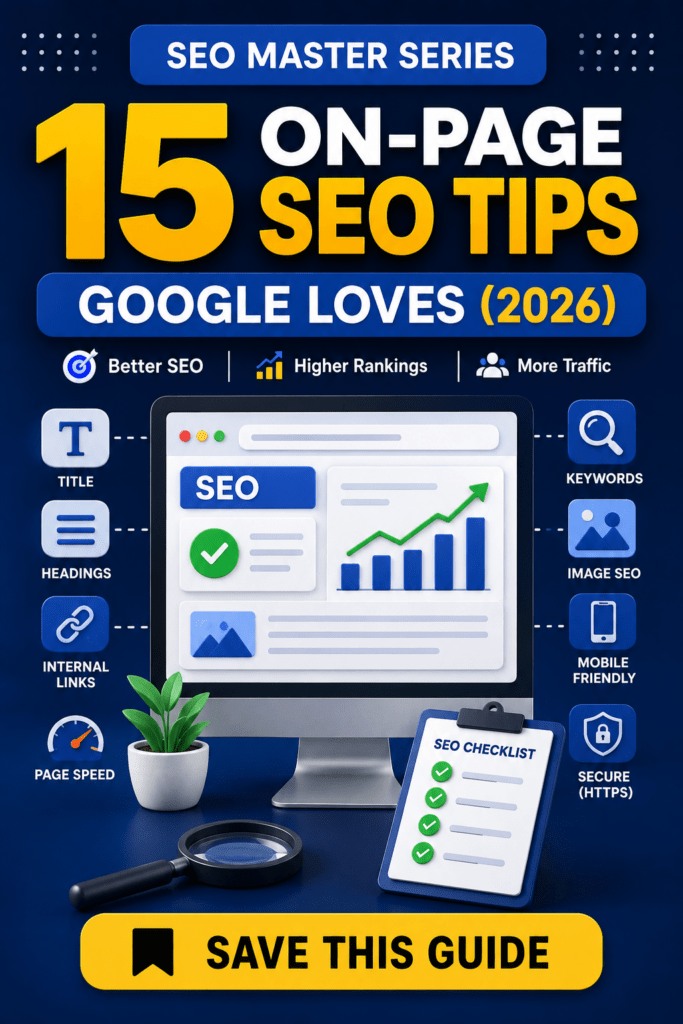
Here are 15 practical on-page SEO tips to improve search visibility and create a better website experience.
1. Use a Clear SEO Title
Create a concise, descriptive title that clearly communicates what the page is about. Include your primary keyword naturally without keyword stuffing.
2. Match Search Intent
Understand why someone is searching for your target keyword. Your content should directly answer the user’s question or solve their problem.
3. Use Your Primary Keyword Naturally
Include your main keyword where it makes sense, such as the title, introduction, headings, and relevant sections. Avoid repeating it unnecessarily.
4. Write a Strong Meta Description
Create a compelling meta description that summarizes the page and encourages users to click from search results.
5. Use Helpful H1 & H2 Headings
Organize your content with clear headings and subheadings. A logical structure improves readability and helps users find information quickly.
6. Improve URL Structure
Keep URLs short, descriptive, and relevant to the page topic. Avoid unnecessary numbers, symbols, and complicated URL structures.
7. Add Internal Links
Link related pages together to help visitors discover more useful content and make your website easier to navigate.
8. Optimize Images
Compress images to reduce loading times and use descriptive filenames and appropriate alt text to provide useful context.
9. Create Useful Original Content
Focus on content that provides genuine value rather than simply rewriting information already available online. Original insights, examples, and practical advice can make your content more useful.
10. Improve Content Readability
Use short paragraphs, bullet points, clear headings, and simple language. A well-formatted page makes information easier to consume.
11. Add Relevant External Links
When appropriate, reference trustworthy and authoritative sources. Useful external references can provide additional context for readers.
12. Optimize for Mobile Users
Make sure your pages work properly on smartphones and tablets. Responsive layouts, readable text, and easy navigation are essential.
13. Improve Page Speed
Fast-loading pages create a better user experience. Optimize images, reduce unnecessary scripts, and improve technical performance.
14. Write Descriptive Image Alt Text
Use meaningful alt text that accurately describes an image when appropriate. Avoid stuffing keywords into alt attributes.
15. Update Old Content Regularly
Review older pages and update outdated information, broken links, statistics, examples, and recommendations when necessary.
Final Thoughts
Effective on-page SEO is not about making dozens of complicated changes at once. Small, consistent improvements can make your pages more useful, accessible, and easier to understand. Start with search intent, content quality, headings, titles, internal linking, mobile usability, and page performance.
Use these 15 on-page SEO tips as a practical checklist whenever you publish or update a webpage. The goal is simple: create content that satisfies users first while making it easy for search engines to understand.
❓ 5 FAQs
1. What is on-page SEO?
On-page SEO is the process of optimizing elements on a webpage—such as content, titles, headings, URLs, images, and internal links—to improve relevance, usability, and search visibility.
2. How important is search intent for SEO?
Search intent is extremely important because content should satisfy what users actually want when they perform a search.
3. Does page speed affect SEO?
Page performance contributes to a better user experience, particularly on mobile devices, so improving page speed is an important part of website optimization.
4. How often should I update old SEO content?
Review important content regularly and update it whenever information becomes outdated, inaccurate, or no longer useful.
5. What is the most important on-page SEO tip?
There is no single optimization that guarantees rankings. A strong starting point is creating helpful, relevant content that matches search intent while maintaining a clear and technically sound page structure.