Search engine optimization has evolved significantly over the years, but one thing remains constant—on-page SEO is the foundation of higher Google rankings. Even the best content may struggle to rank if your pages are not properly optimized.
The good news is that you don’t need a complete website redesign to improve your rankings. Often, small SEO improvements can make a big difference in how search engines understand and rank your content.
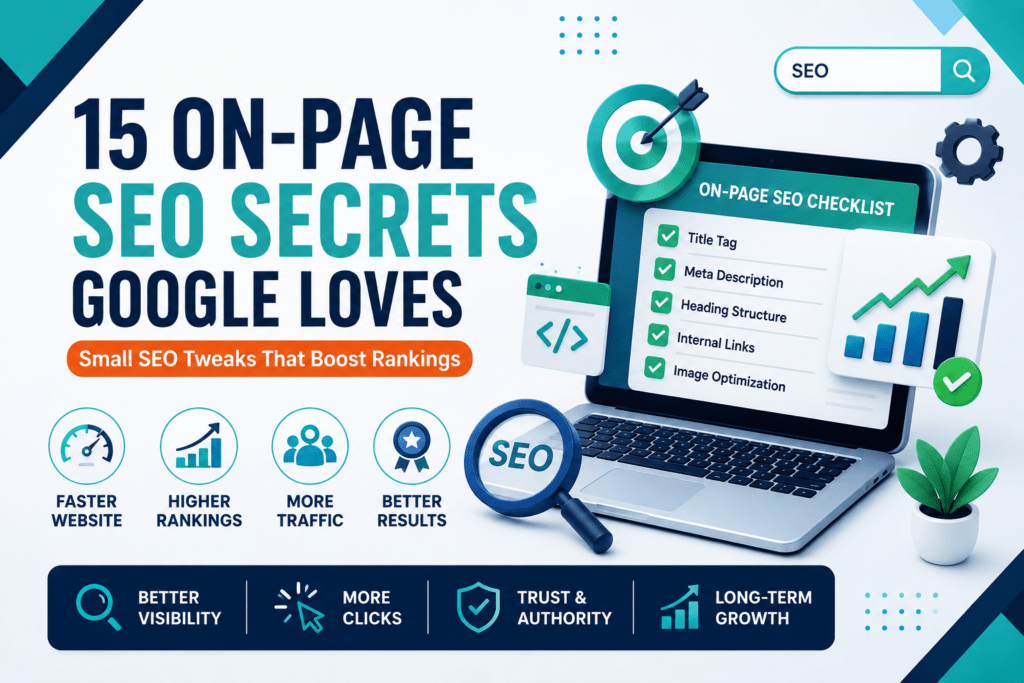
Here are 15 on-page SEO secrets that Google loves and every website owner, blogger, and digital marketer should implement in 2026.
1. Match Search Intent
Before writing content, understand what users actually want. Whether they are looking for information, products, comparisons, or services, your content should directly satisfy their search intent.
2. Write an SEO-Friendly Title Tag
Your title tag is one of the strongest on-page ranking signals. Include your primary keyword naturally while keeping the title clear, engaging, and under 60 characters whenever possible.
3. Create a Compelling Meta Description
Although meta descriptions are not a direct ranking factor, they improve click-through rates. Write concise descriptions that encourage users to visit your page.
4. Use Proper Heading Structure
Organize your content using H1, H2, H3, and H4 headings. A clear structure improves readability for both users and search engines.
5. Optimize Your URL
Keep URLs short, descriptive, and keyword-rich. Avoid unnecessary numbers, symbols, or long strings of text.
6. Add Internal Links
Link to relevant pages within your website. Internal linking improves crawlability, distributes authority, and keeps visitors engaged longer.
7. Optimize Images
Compress images, use descriptive filenames, add relevant ALT text, and choose modern formats like WebP to improve page speed and accessibility.
8. Improve Page Speed
Fast-loading websites provide a better user experience and reduce bounce rates. Optimize scripts, enable caching, and minimize unnecessary resources.
9. Make Your Website Mobile-Friendly
Google uses mobile-first indexing, so your website must perform well across smartphones and tablets with responsive layouts and easy navigation.
10. Include Related Keywords
Instead of repeating the same keyword, naturally use semantic and related keywords throughout your content. This helps Google better understand your topic.
11. Write Helpful, Original Content
Focus on creating valuable content that answers users’ questions completely. Original, informative content builds trust and performs better in search results.
12. Add Schema Markup
Structured data helps search engines understand your content and can increase your chances of earning rich results such as FAQs and featured snippets.
13. Optimize Core Web Vitals
Monitor metrics like Largest Contentful Paint (LCP), Interaction to Next Paint (INP), and Cumulative Layout Shift (CLS) to provide a smoother browsing experience.
14. Improve Readability
Use short paragraphs, bullet points, descriptive headings, and simple language. Easy-to-read content encourages users to stay on your page longer.
15. Regularly Update Existing Content
SEO is not a one-time task. Refresh your articles with updated statistics, examples, screenshots, and new insights to keep them relevant and competitive.
Final Thoughts
Successful SEO is built on consistent improvements rather than quick fixes. By applying these 15 on-page SEO secrets, you make your website easier for both users and search engines to understand. Small optimizations such as improving page speed, refining headings, strengthening internal links, and publishing valuable content can lead to significant ranking improvements over time.
Remember that Google’s primary goal is to deliver the most helpful content to users. If your pages provide value, load quickly, and offer an excellent user experience, you will build stronger search visibility and sustainable organic traffic. Continue monitoring your performance, testing new ideas, and updating your content regularly to stay ahead in the ever-changing world of SEO.
Frequently Asked Questions (FAQs)
1. What is On-Page SEO?
On-page SEO is the process of optimizing individual web pages by improving content, headings, meta tags, images, internal links, URLs, and user experience to achieve higher rankings in search engines.
2. Why is On-Page SEO important for Google rankings?
On-page SEO helps Google understand your content, improves user experience, increases crawlability, and boosts your chances of ranking higher for relevant keywords.
3. Which On-Page SEO factor has the biggest impact?
High-quality content that matches user search intent is the most important factor. Supporting elements like title tags, headings, page speed, and internal links further strengthen your rankings.
4. How often should I update my On-Page SEO?
Review and update important pages every 3–6 months to keep content fresh, improve accuracy, and maintain strong search performance.
5. Can small SEO changes really improve rankings?
Yes. Simple improvements such as optimizing title tags, enhancing page speed, adding internal links, improving image SEO, and updating content can significantly improve rankings over time.