Digital marketing continues to evolve every year, and staying ahead requires using the right tools. Whether you’re an SEO specialist, content creator, freelancer, business owner, or digital marketing student, the right software can help you save time, improve productivity, and achieve better results.
From keyword research and website analytics to AI writing assistants and social media scheduling, modern digital marketing tools make it easier to plan, execute, and optimise campaigns.
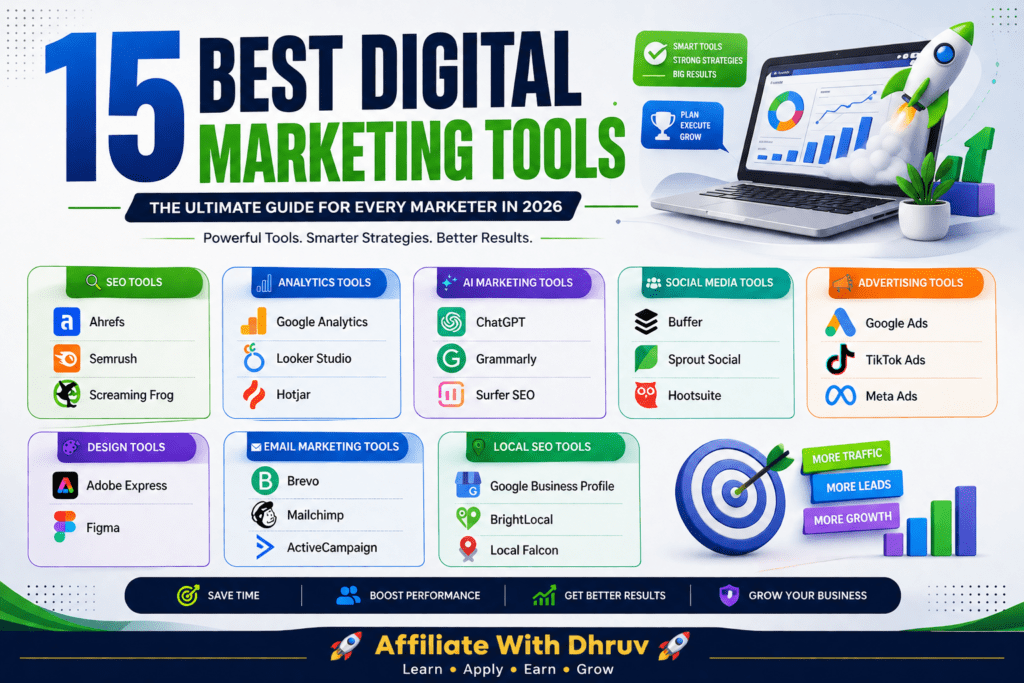
In this guide, we’ll explore 15 of the best digital marketing tools in 2026 across different categories and explain why they deserve a place in your marketing toolkit.
Why Digital Marketing Tools Matter
Digital marketing involves many tasks, including SEO, content creation, email marketing, paid advertising, analytics, and social media management. Managing everything manually can be time-consuming and inefficient.
The right tools help you:
- Improve productivity
- Automate repetitive tasks
- Analyse campaign performance
- Create better content
- Improve search engine rankings
- Increase website traffic
- Make data-driven marketing decisions
Using professional tools also helps businesses stay competitive in today’s fast-changing digital landscape.
1. SEO Tools
Search Engine Optimisation (SEO) is essential for increasing organic traffic and improving search rankings.
Ahrefs
One of the most powerful SEO tools for keyword research, backlink analysis, competitor research, and website audits.
Semrush
A complete digital marketing platform offering SEO, PPC research, content marketing, keyword tracking, and competitor analysis.
Screaming Frog
A website crawler that helps identify technical SEO issues such as broken links, duplicate content, missing meta tags, and crawl errors.
2. Analytics Tools
Understanding your website data is crucial for making informed marketing decisions.
Google Analytics
Tracks website traffic, user behaviour, conversions, and audience insights to measure marketing performance.
Looker Studio
Creates interactive dashboards by combining data from multiple marketing platforms into one visual report.
Hotjar
Provides heatmaps, session recordings, and user feedback to help improve website usability and conversion rates.
3. AI Marketing Tools
Artificial Intelligence has become an essential part of digital marketing.
ChatGPT
Helps generate blog posts, marketing copy, email campaigns, SEO content, and creative ideas quickly.
Grammarly
Improves grammar, spelling, readability, and writing clarity for professional communication.
Surfer SEO
Combines AI with SEO recommendations to optimise blog content for higher search engine rankings.
4. Social Media Management Tools
Managing multiple social media platforms becomes much easier with scheduling and analytics tools.
Buffer
Allows users to schedule posts, manage content calendars, and analyse engagement across various platforms.
Sprout Social
Offers advanced social media management, customer engagement, reporting, and team collaboration features.
Hootsuite
Supports scheduling, monitoring conversations, and tracking social media performance from a single dashboard.
5. Advertising Tools
Paid advertising remains one of the fastest ways to generate traffic and leads.
Google Ads
Helps businesses appear in Google Search results, YouTube, and partner websites through targeted advertising campaigns.
TikTok Ads
Enables brands to reach younger audiences using engaging short-form video advertisements.
Meta Ads
Allows businesses to advertise across Facebook, Instagram, Messenger, and the Meta Audience Network.
6. Design Tools
Professional visuals improve marketing campaigns and increase audience engagement.
Adobe Express
Makes it easy to create social media graphics, presentations, posters, and promotional materials.
Figma
A collaborative design platform widely used for UI/UX design, website mockups, and team-based creative projects.
7. Email Marketing Tools
Email marketing continues to deliver one of the highest returns on investment.
Brevo
Offers email marketing, SMS campaigns, automation workflows, and CRM features in one platform.
Mailchimp
A beginner-friendly email marketing tool with templates, automation, audience segmentation, and analytics.
ActiveCampaign
Combines email marketing, automation, customer relationship management, and sales tracking.
8. Local SEO Tools
Local businesses rely on visibility in location-based searches.
Google Business Profile
Helps businesses appear in Google Search and Google Maps while managing reviews, photos, and business information.
BrightLocal
Provides local SEO audits, citation tracking, review management, and local ranking reports.
Local Falcon
Visualises local search rankings using map-based tracking, helping businesses understand their visibility in different areas.
Final Thoughts
Digital marketing success depends not only on strategy but also on the tools you use. The 15 digital marketing tools featured in this guide cover every major area of online marketing, including SEO, analytics, AI, social media, advertising, design, email marketing, and local SEO.
You don’t need to master every tool at once. Start with the ones that match your current goals, learn their features, and gradually expand your toolkit as your skills and business grow.
Investing time in the right digital marketing tools will help you work smarter, improve campaign performance, and stay competitive in 2026 and beyond.
Frequently Asked Questions (FAQs)
1. What are the best digital marketing tools in 2026?
Some of the best digital marketing tools in 2026 include Ahrefs, Semrush, Google Analytics, ChatGPT, Grammarly, Buffer, Hootsuite, Google Ads, Adobe Express, Mailchimp, and Google Business Profile. These tools help with SEO, analytics, content creation, advertising, and business growth.
2. Which digital marketing tool is best for beginners?
For beginners, ChatGPT, Google Analytics, Canva (or Adobe Express), Buffer, and Google Business Profile are excellent choices. They are easy to learn and cover the essential areas of digital marketing.
3. Why are digital marketing tools important?
Digital marketing tools help businesses automate repetitive tasks, analyse campaign performance, improve SEO, manage social media, create high-quality content, and make data-driven decisions that increase online visibility and sales.
4. Do I need to use all digital marketing tools?
No. You don’t need every tool. Start with the tools that match your goals, such as SEO, content creation, social media management, or analytics, and expand your toolkit as your business grows.
5. Which digital marketing tool is best for SEO?
Ahrefs, Semrush, and Screaming Frog are among the best SEO tools. They help with keyword research, competitor analysis, backlink monitoring, website audits, and technical SEO improvements.