
Search engine optimization (SEO) is one of the most effective ways to increase organic traffic, improve online visibility, and attract the right audience. However, even small SEO mistakes can make it harder for search engines to understand and rank your website.
Whether you are a beginner, blogger, business owner, or digital marketer, avoiding common SEO mistakes can help build a stronger foundation for long-term growth. Here are 10 SEO mistakes that can hurt your Google rankings and what you can do instead.
1. Keyword Stuffing
Using the same keyword repeatedly can make your content unnatural and difficult to read. Search engines are designed to understand context, not simply count keywords.
Better approach: Use relevant keywords naturally and include related terms where they make sense.
2. Ignoring Search Intent
Creating content without understanding what users actually want can result in poor rankings and low engagement.
Better approach: Before writing, determine whether the searcher wants information, a product, a comparison, or a specific solution.
3. Duplicate Content
Duplicate or nearly identical content across multiple pages can make it difficult for search engines to determine which page should appear in search results.
Better approach: Create original, useful content for each important page and consolidate unnecessary duplicates.
4. Slow Page Speed
A slow website can create a frustrating experience for visitors, especially on mobile devices. Performance is also an important part of providing a good page experience.
Better approach: Compress images, reduce unnecessary scripts, use efficient hosting, and monitor your site’s performance regularly.
5. Poor Mobile UX
Many users browse websites from smartphones. If your pages are difficult to navigate or read on smaller screens, visitors may leave quickly.
Better approach: Use responsive design, readable fonts, clear buttons, and simple navigation.
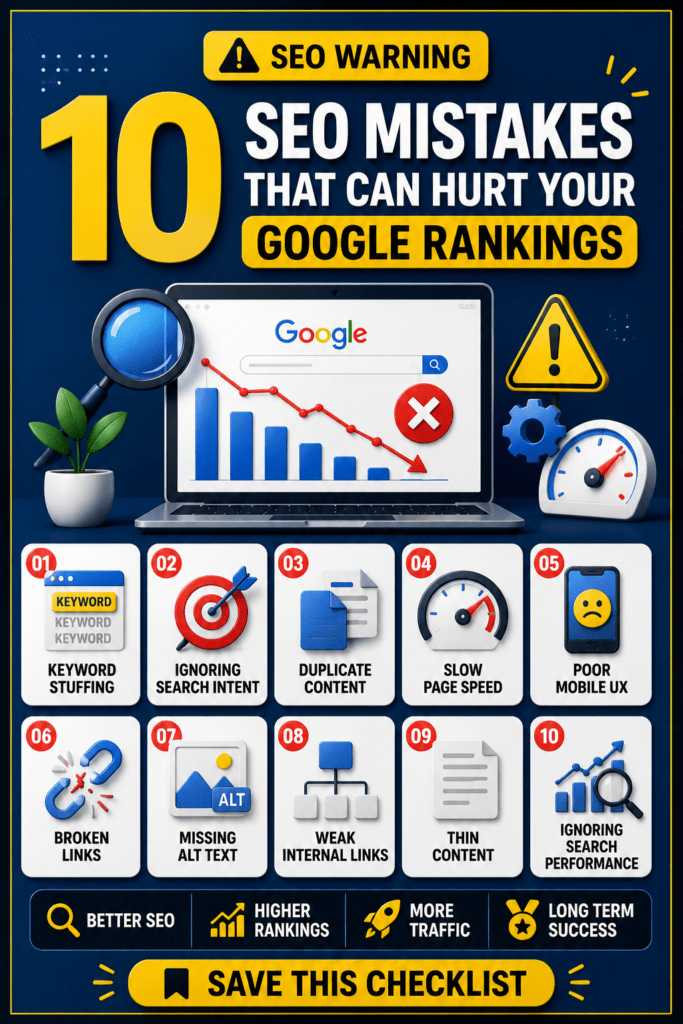
6. Broken Links
Broken internal or external links can create poor user experiences and make website maintenance more difficult.
Better approach: Regularly audit your website and replace or remove broken links.
7. Missing Alt Text
Images can provide useful context, but search engines cannot interpret every image the same way humans do.
Better approach: Add concise, descriptive alt text where appropriate, particularly for meaningful images.
8. Weak Internal Linking
Internal links help users discover related content and help search engines understand the relationship between pages.
Better approach: Link relevant pages naturally using descriptive anchor text.
9. Thin Content
Short content is not automatically bad, but pages that fail to provide meaningful value may struggle to satisfy search intent.
Better approach: Focus on useful, original, comprehensive content rather than writing simply to reach a word count.
10. Ignoring Search Performance
Publishing content without checking how it performs means you may miss valuable opportunities for improvement.
Better approach: Monitor impressions, clicks, queries, rankings, and page performance regularly, then update your SEO strategy based on the data.
Final Thoughts
SEO success is not about finding one magic trick. It comes from consistently creating helpful content, improving website performance, satisfying search intent, and maintaining a strong user experience.
By avoiding these 10 common SEO mistakes, you can create a healthier website foundation and give your content a better opportunity to perform in Google Search.
5 Frequently Asked Questions
1. What is the biggest SEO mistake beginners make?
Keyword stuffing and ignoring search intent are two of the most common beginner mistakes. SEO should prioritize useful content and user needs rather than excessive keyword usage.
2. Does page speed affect SEO?
Page performance can contribute to a better user experience and is an important part of Google’s page experience considerations. Improving speed is therefore a valuable SEO practice.
3. Is duplicate content bad for SEO?
Duplicate content can create confusion about which version of a page should be prioritized. Creating unique, valuable content is generally the better approach.
4. How often should I check my SEO performance?
Checking performance at least monthly is a good starting point. For active websites, more frequent monitoring can help identify issues and opportunities sooner.
5. Can fixing SEO mistakes improve Google rankings?
Fixing technical and content issues can improve a site’s ability to be crawled, understood, and used effectively. However, rankings depend on many factors, so improvements are not guaranteed immediately.