Search engine optimization can feel complicated when you are just getting started. From keyword research and website analysis to technical SEO and performance monitoring, there are many tasks to manage. The right SEO tools for beginners can make this process much easier by helping you research, analyze, optimize, and improve your website.
In 2026, you do not need dozens of expensive platforms to build a strong SEO workflow. A combination of free and premium tools can cover most essential SEO tasks.
1. Google Search Console
Google Search Console helps you monitor your website’s performance in Google Search, identify indexing issues, and understand which queries bring visitors to your website.
2. Google Analytics
Google Analytics provides valuable information about website visitors, traffic sources, engagement, and user behavior. It helps you understand what happens after users reach your website.
3. Google Keyword Planner
Keyword Planner is useful for discovering keyword ideas and understanding search demand. It can be particularly helpful when building an initial keyword strategy.
4. Google Trends
Google Trends helps you explore search interest over time and compare topics. It is useful for finding trending subjects and identifying changes in audience interest.
5. Google Search
Sometimes the simplest SEO tool is Google itself. Search results can reveal related searches, autocomplete suggestions, competitors, and the type of content currently ranking for a topic.
6. Ahrefs Webmaster Tools
Ahrefs Webmaster Tools can help eligible website owners analyze important SEO information, including website health and backlink-related data.
7. Ubersuggest
Ubersuggest provides keyword ideas, SEO analysis, competitor insights, and content research features. Its free access has limitations, while additional features are available through paid plans.
8. AnswerThePublic
AnswerThePublic helps uncover questions and phrases people search around a topic. This makes it useful for generating blog and content ideas.
9. Screaming Frog
Screaming Frog SEO Spider is designed for technical website analysis. It can help identify issues such as broken links, missing metadata, duplicate elements, and other on-page problems. Its free version has limitations.
10. Yoast SEO
Yoast SEO is a popular WordPress SEO plugin that helps with on-page optimization, metadata, readability, and other SEO-related tasks. Some advanced features require a premium version.
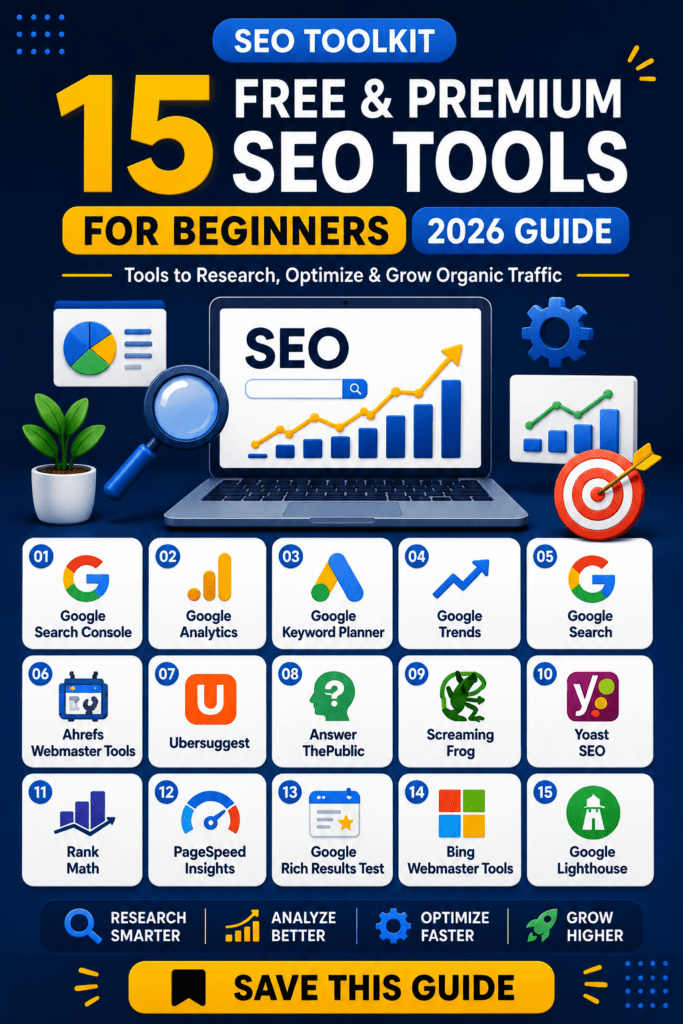
11. Rank Math
Rank Math is another WordPress SEO plugin offering tools for optimizing content and managing various SEO settings. It provides both free and premium functionality.
12. PageSpeed Insights
Google PageSpeed Insights evaluates webpage performance and provides suggestions for improving loading speed and user experience.
13. Google Rich Results Test
This tool helps you check whether structured data on a webpage may be eligible for Google’s rich results.
14. Bing Webmaster Tools
Bing Webmaster Tools provides website owners with search performance and SEO-related insights for Microsoft’s search engine.
15. Google Lighthouse
Lighthouse is an automated tool for evaluating webpages across areas such as performance, accessibility, best practices, and SEO.
Final Thoughts
The best SEO tools for beginners are not necessarily the most expensive ones. Start with free tools such as Google Search Console, Google Analytics, Google Trends, Keyword Planner, PageSpeed Insights, and Lighthouse. As your website grows, premium platforms can provide deeper keyword, competitor, backlink, and technical analysis.
The key is to avoid using tools simply for the sake of collecting data. Use them to answer specific questions, identify opportunities, fix problems, and make better SEO decisions.
With the right combination of tools and consistent optimization, beginners can build a practical SEO workflow and work toward stronger organic visibility in 2026.
❓ 5 FAQs
1. What are the best SEO tools for beginners?
Google Search Console, Google Analytics, Google Keyword Planner, Google Trends, and PageSpeed Insights are excellent starting points because they cover several fundamental SEO tasks.
2. Can I do SEO without paying for expensive tools?
Yes. Many important SEO tasks can be performed with free tools. Premium platforms become more useful when you need deeper competitor, keyword, backlink, or technical analysis.
3. Which tool is best for keyword research?
Google Keyword Planner is a useful starting point. Other tools such as Ubersuggest, Ahrefs, and AnswerThePublic can provide additional keyword and content insights.
4. Are all SEO tools completely free?
No. Some tools offer free versions with limitations, while others use premium plans. Always check the current features and usage limits before choosing a tool.
5. Which SEO tool should a beginner use first?
Start with Google Search Console. It provides valuable information about how your website performs in Google Search and can help you identify indexing and search-performance issues.