Search engine optimization (SEO) can feel complicated when you are just starting out. From keyword research and website audits to tracking rankings and understanding search performance, there are many areas to learn. The right SEO tools can make this process much easier and help beginners build a strong SEO foundation.
Here are 10 best SEO tools for beginners in 2026 that can help you research keywords, optimize websites, analyze competitors, and grow organic traffic.
1. Google Search Console
Google Search Console is one of the most important free SEO tools for beginners. It helps you understand how your website performs in Google Search. You can monitor clicks, impressions, search queries, indexing issues, and page performance.
2. Google Keyword Planner
Google Keyword Planner is useful for discovering keyword ideas and understanding search demand. Beginners can use it to find relevant keywords before creating blog posts, landing pages, or other content.
3. Google Trends
Google Trends helps you identify popular topics and changes in search interest over time. It is particularly useful for discovering trending topics and comparing different keywords.
4. Ahrefs
Ahrefs is a powerful SEO platform for keyword research, backlink analysis, competitor research, and website auditing. While it offers advanced features, beginners can start with basic keyword and competitor research.
5. Semrush
Semrush provides a wide range of SEO and digital marketing features. You can use it for keyword research, competitor analysis, site audits, backlink research, and tracking SEO performance.
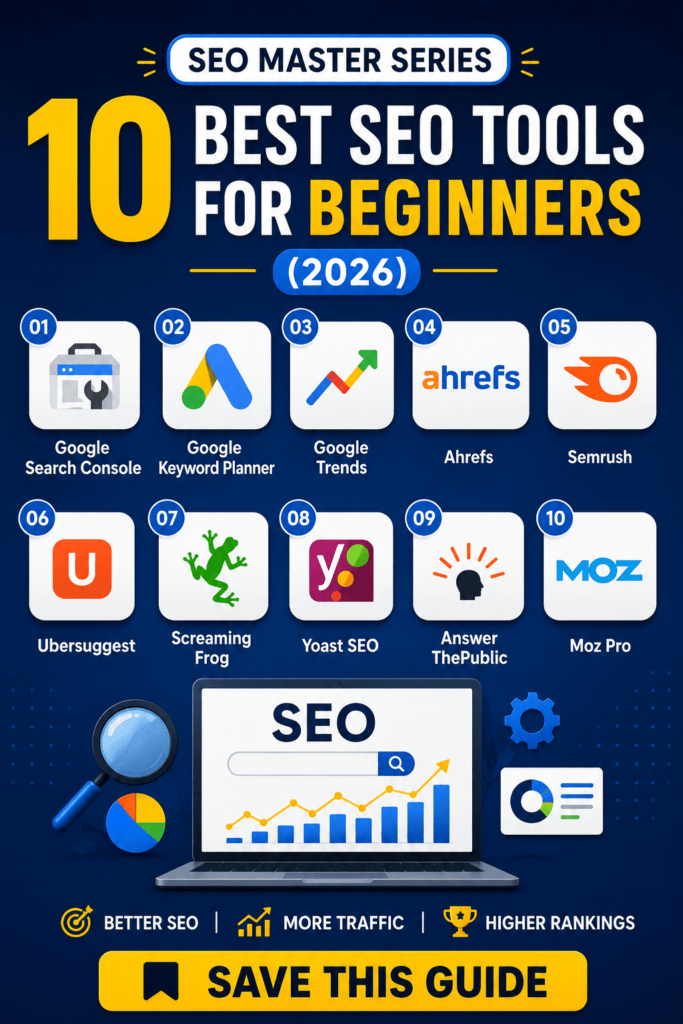
6. Ubersuggest
Ubersuggest is beginner-friendly and useful for finding keyword ideas, content opportunities, and basic SEO insights. Its simple interface makes it easier for new SEO learners to understand keyword research.
7. Screaming Frog
Screaming Frog is an SEO website crawler that helps identify technical issues such as broken links, missing metadata, duplicate content, and other on-page problems.
8. Yoast SEO
For WordPress users, Yoast SEO can make basic on-page optimization easier. It provides recommendations for elements such as SEO titles, meta descriptions, readability, and content structure.
9. AnswerThePublic
AnswerThePublic helps discover questions and topics people search for. These insights can be useful for creating blog posts, FAQs, and helpful content that matches search intent.
10. Moz Pro
Moz Pro offers tools for keyword research, rank tracking, site audits, and backlink analysis. It can help beginners understand important SEO metrics while developing a long-term SEO strategy.
Why Use SEO Tools?
SEO tools don’t replace strategy, but they make research and analysis much more efficient. Instead of guessing which keywords to target or what problems your website has, you can use data to make better decisions.
For beginners, the best approach is to start with free tools such as Google Search Console, Google Keyword Planner, and Google Trends. Once you understand the fundamentals, you can explore advanced platforms such as Ahrefs, Semrush, and Moz Pro.
Remember, successful SEO is not just about using tools. You also need helpful content, relevant keywords, strong website structure, good user experience, and consistent optimization.
5 FAQs
1. What is the best SEO tool for beginners?
Google Search Console is one of the best starting points because it is free and provides valuable information about how your website performs in Google Search.
2. Are SEO tools necessary for beginners?
SEO tools are not absolutely necessary, but they make keyword research, website analysis, competitor research, and performance tracking much easier.
3. Which free SEO tools should beginners use?
Beginners can start with Google Search Console, Google Keyword Planner, and Google Trends to learn the fundamentals without investing in paid software.
4. Is Ahrefs good for beginners?
Yes. Ahrefs has advanced features, but beginners can start with basic functions such as keyword research, backlink analysis, and competitor research.
5. Can SEO tools help increase Google rankings?
SEO tools can help identify opportunities and problems, but they cannot guarantee rankings. Higher rankings depend on factors such as content quality, relevance, technical SEO, authority, and user experience.