
Search engine optimization is essential for increasing website visibility, attracting organic traffic, and reaching the right audience. However, even a well-designed website can struggle to rank when common SEO mistakes are left unresolved. In 2026, successful SEO requires a balanced approach that combines quality content, technical performance, user experience, and search intent.
Here are 15 SEO mistakes that can negatively affect your rankings and overall website performance.
1. Keyword Stuffing
Using the same keyword excessively can make content unnatural and difficult to read. Use keywords naturally and focus on providing useful information.
2. Ignoring Search Intent
Content should match what users actually want to find. Understanding informational, commercial, navigational, and transactional intent helps create more relevant pages.
3. Duplicate Content
Duplicate or highly similar content can make it difficult for search engines to determine which page should be prioritized. Create unique, valuable content for every important page.
4. Weak Page Titles
Your title helps both users and search engines understand your page. Write clear, descriptive titles that accurately represent the content.
5. Poor URL Structure
Complicated URLs can reduce clarity. Keep URLs short, descriptive, and relevant to the page topic.
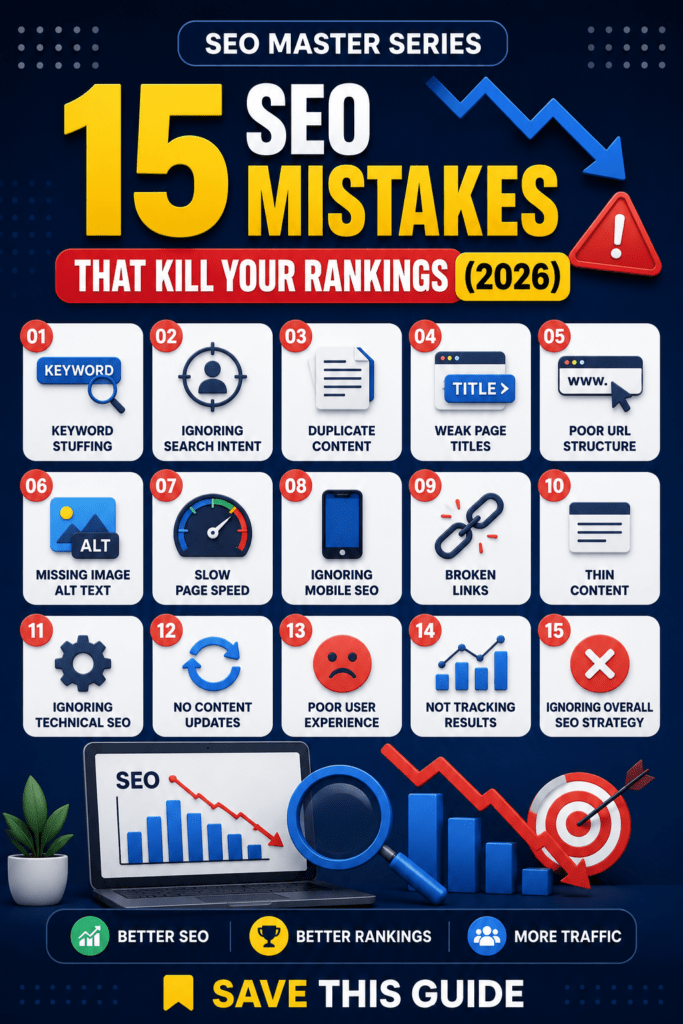
6. Missing Image Alt Text
Descriptive alt text helps search engines understand images and improves accessibility. Avoid stuffing keywords into alt attributes.
7. Slow Page Speed
Slow websites can create a poor user experience. Optimize images, reduce unnecessary scripts, and improve overall website performance.
8. Ignoring Mobile SEO
Most users browse websites on mobile devices. Make sure your website is responsive, easy to navigate, and readable on smaller screens.
9. Broken Links
Broken internal and external links can create frustrating user experiences. Regularly check your website and replace or remove outdated links.
10. Thin Content
Short content isn’t automatically bad, but pages that fail to provide useful information may struggle to perform well. Focus on depth, relevance, and user value.
11. Ignoring Technical SEO
Technical issues such as crawlability problems, indexing errors, poor site architecture, and incorrect redirects can prevent search engines from properly accessing your website.
12. No Content Updates
Search intent and information can change over time. Review important pages regularly and update outdated information when necessary.
13. Poor User Experience
A confusing layout, intrusive elements, difficult navigation, or unreadable content can discourage visitors. Build pages primarily for people, not just search engines.
14. Not Tracking SEO Results
Without monitoring performance, you won’t know what is working. Track rankings, organic traffic, clicks, impressions, and conversions to make informed decisions.
15. Ignoring Overall SEO Strategy
SEO works best as a complete system. Combining keyword research, quality content, technical optimization, internal linking, mobile optimization, and performance tracking creates a stronger foundation for sustainable growth.
Final Thoughts
Avoiding these common SEO mistakes can help create a healthier website and improve your chances of gaining organic visibility. Instead of chasing quick ranking tricks, focus on useful content, strong technical foundations, excellent user experience, and consistent optimization.
SEO is an ongoing process. Regular audits and improvements can help your website stay competitive as search behavior and search technology continue to evolve.
5 FAQs
1. What is the biggest SEO mistake beginners make?
Keyword stuffing and ignoring search intent are two common mistakes. Content should naturally satisfy what users are searching for.
2. Does page speed affect SEO?
Yes. Website performance is an important part of providing a good user experience, particularly on mobile devices.
3. How often should I update my SEO content?
There is no fixed schedule. Review important content periodically and update it whenever information, search intent, or industry conditions change.
4. Why is mobile SEO important?
A large portion of web traffic comes from mobile devices. A responsive, easy-to-use mobile website provides a better experience for visitors.
5. How can I find SEO mistakes on my website?
You can perform an SEO audit by checking technical issues, broken links, page titles, URLs, content quality, mobile usability, indexing, and website performance.