
Ranking for highly competitive keywords can be difficult, especially for new websites and small businesses. Instead of competing for broad terms with thousands of searches, focusing on long-tail keywords can help you attract more targeted visitors and build organic traffic gradually.
Long-tail keywords are specific search phrases that usually contain three or more words. For example, instead of targeting “SEO”, you could target “SEO tips for beginners” or “free SEO tools for beginners.” These searches are more specific and often have clearer search intent.
Why Long-Tail Keywords Matter
One of the biggest advantages of long-tail keywords is lower competition. While broad keywords can be dominated by large websites, specific phrases may provide smaller websites with better opportunities to appear in search results.
Long-tail keywords can also attract users who know exactly what they want. Someone searching for “best free keyword research tools” is likely looking for a specific solution and may be more engaged than someone simply searching for “SEO.”
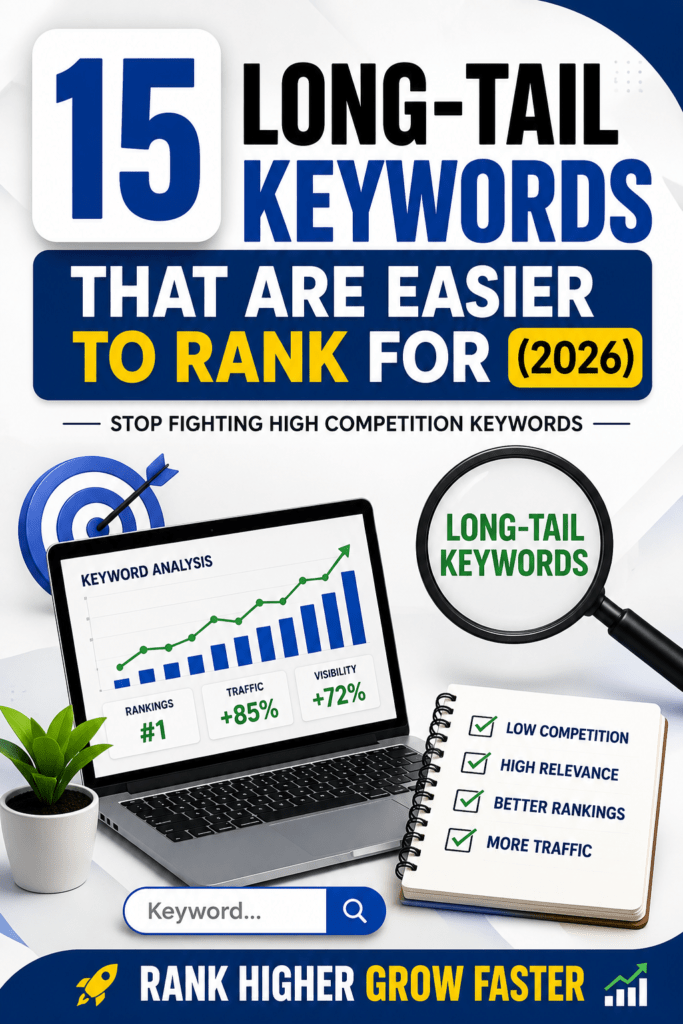
15 Long-Tail Keyword Ideas
Here are 15 examples that can inspire your keyword research:
SEO tips for beginners
Free SEO tools for beginners
How to do keyword research
Best SEO tools for small business
How to improve Google rankings
On-page SEO checklist for beginners
Technical SEO checklist for beginners
SEO tips for small websites
How to find low competition keywords
Best free keyword research tools
SEO strategy for beginners
How to rank on Google
Long-tail keywords for SEO
SEO mistakes beginners should avoid
How to get organic traffic
These keywords can be used as starting points rather than blindly targeting every phrase. Before creating content, analyze the search intent, competition, relevance, and existing search results.
How to Find Better Long-Tail Keywords
Start with a broad topic related to your website. Then use Google autocomplete, related searches, keyword research tools, forums, and question-based searches to discover more specific phrases.
Pay close attention to search intent. A keyword may have good search volume but still be unsuitable if it does not match your content or audience.
You should also study the pages currently ranking for your target keyword. Look at their content quality, topic coverage, backlinks, page structure, and overall usefulness. This can help you identify opportunities to create something better.
Create Content Around Search Intent
Once you find promising long-tail keywords, create useful content that directly answers the user’s query. Avoid keyword stuffing. Instead, naturally include your primary keyword along with related terms and questions.
You can also build topic clusters by connecting several related articles through internal links. Over time, this can help establish your website as a useful resource within a specific niche.
Final Thoughts
Long-tail keywords can be an effective SEO strategy for beginners, bloggers, affiliate marketers, and small businesses. They allow you to target specific searches, understand user intent, and compete for relevant organic traffic without relying entirely on highly competitive keywords.
The goal isn’t simply to find keywords with low competition. The best keyword is one that is relevant, has clear intent, and can be answered better than the existing results.
5 FAQs
1. What are long-tail keywords?
Long-tail keywords are specific search phrases, usually containing three or more words, that target a narrower search intent.
2. Are long-tail keywords easier to rank for?
Often, yes. They generally have less competition than broad keywords, although difficulty varies by topic and search query.
3. How do I find low-competition long-tail keywords?
Use Google autocomplete, related searches, keyword research tools, competitor research, and question-based searches to discover specific phrases.
4. Should beginners focus on long-tail keywords?
Yes. Long-tail keywords can be a practical starting point for new websites because they allow you to target specific topics instead of competing immediately for highly competitive broad keywords.
5. Can long-tail keywords increase organic traffic?
Yes. When you target relevant keywords and create genuinely useful content that matches search intent, long-tail keywords can contribute to consistent organic traffic.