
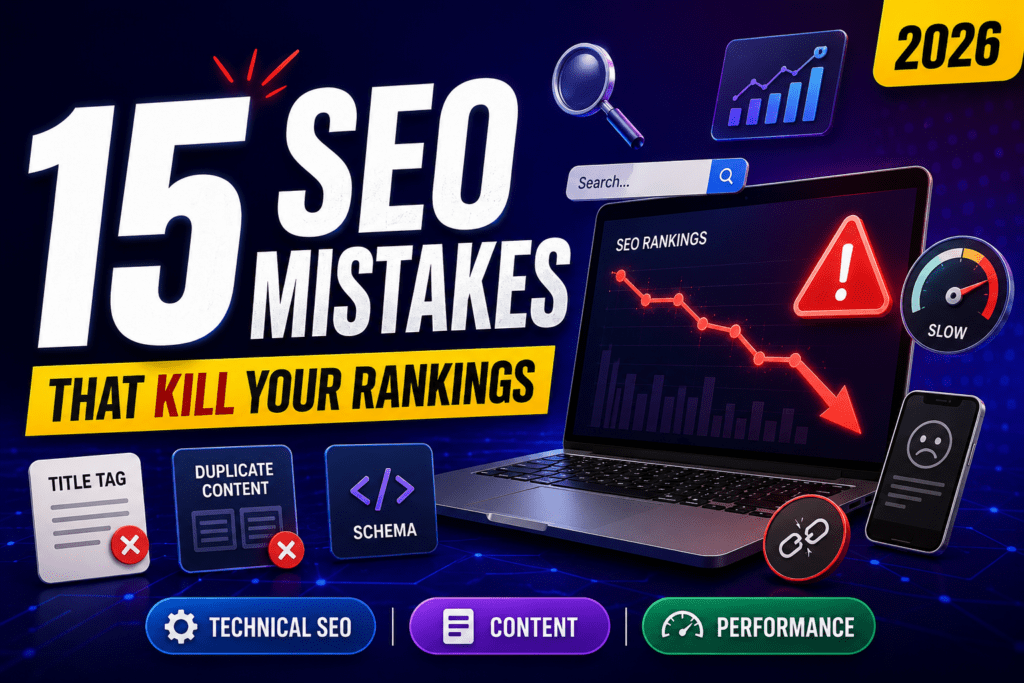
Search Engine Optimization (SEO) continues to evolve every year, and in 2026, Google is rewarding websites that provide exceptional user experience, valuable content, and strong technical performance. Unfortunately, many website owners unknowingly make SEO mistakes that significantly reduce their rankings, organic traffic, and online visibility.
Whether you own a business website, an eCommerce store, or a blog, avoiding these common SEO mistakes can dramatically improve your search engine performance.
1. Targeting the Wrong Keywords
Choosing keywords with no search intent or targeting highly competitive keywords can prevent your content from ranking. Always perform keyword research before creating content.
2. Keyword Stuffing
Repeating the same keyword excessively makes content look unnatural. Modern SEO focuses on semantic keywords and natural writing rather than keyword repetition.
3. Missing Title Tags
Your page title is one of Google’s strongest ranking signals. Every page should have a unique, keyword-rich, and compelling title tag.
4. Duplicate Content
Publishing identical or copied content across multiple pages confuses search engines and may reduce your rankings. Always create original and valuable content.
5. Broken Links
Broken internal and external links create a poor user experience and waste crawl budget. Regularly audit your website and fix broken URLs.
6. Slow Website Speed
Page speed directly impacts both user experience and SEO. Compress images, enable caching, and optimize your website to improve loading time.
7. Ignoring Mobile SEO
With mobile-first indexing, Google primarily evaluates the mobile version of your website. Ensure your website is responsive and mobile-friendly.
8. Missing Meta Descriptions
Although meta descriptions are not a direct ranking factor, they improve click-through rates by encouraging users to visit your website from search results.
9. Poor Internal Linking
A strong internal linking structure helps search engines understand your website hierarchy while distributing page authority effectively.
10. Ignoring Image SEO
Optimize image filenames, use descriptive ALT text, compress image sizes, and implement modern formats like WebP to improve performance.
11. No Schema Markup
Structured data helps search engines understand your content better and can increase visibility through rich results in Google Search.
12. Thin Content
Pages with little useful information rarely perform well. Publish detailed, informative, and user-focused content that genuinely answers search intent.
13. Not Using HTTPS
Website security is essential. HTTPS builds trust with visitors and remains an important technical SEO factor.
14. Ignoring Search Intent
Even perfectly optimized content won’t rank if it doesn’t satisfy what users are actually searching for. Match your content to informational, commercial, or transactional intent.
15. Never Performing SEO Audits
SEO is not a one-time task. Regular audits help identify technical issues, outdated content, broken links, indexing problems, and optimization opportunities before they affect your rankings.
Final Thoughts
SEO success in 2026 requires much more than simply adding keywords to your content. Search engines prioritize websites that offer valuable information, excellent user experience, fast performance, and strong technical optimization.
By avoiding these 15 common SEO mistakes, you can improve your website’s visibility, attract more organic traffic, increase click-through rates, and build long-term authority in Google’s search results. Regular SEO audits, consistent content updates, and a user-first strategy will keep your website competitive in an ever-changing digital landscape.
Remember, SEO is a continuous process—not a one-time project. Stay updated with Google’s latest best practices, monitor your website’s performance, and keep optimizing for sustainable growth.
5 SEO FAQs
1. What is the biggest SEO mistake in 2026?
The biggest SEO mistake is creating content without understanding user search intent. Even well-optimized pages struggle to rank if they don’t answer what users are looking for.
2. How often should I perform an SEO audit?
A complete SEO audit should be performed every 3 to 6 months, while technical issues and broken links should be monitored monthly.
3. Does website speed affect Google rankings?
Yes. Faster websites provide better user experience and are more likely to rank higher in Google’s search results.
4. Is keyword stuffing still harmful?
Absolutely. Google can recognize unnatural keyword repetition, which may negatively impact rankings. Focus on natural language and topic relevance instead.
5. Why is internal linking important for SEO?
Internal links help search engines discover pages, understand your website structure, and distribute authority throughout your site, improving overall rankings.