Technical SEO is the foundation of every successful website. Even if you publish high-quality content and target the right keywords, poor technical optimization can prevent your pages from ranking on Google. Search engines need to crawl, index, and understand your website efficiently before your content can appear in search results.
In 2026, Google’s ranking algorithms continue to prioritize websites that offer excellent performance, security, and user experience. A technically optimized website not only improves search rankings but also provides visitors with a faster and smoother browsing experience.
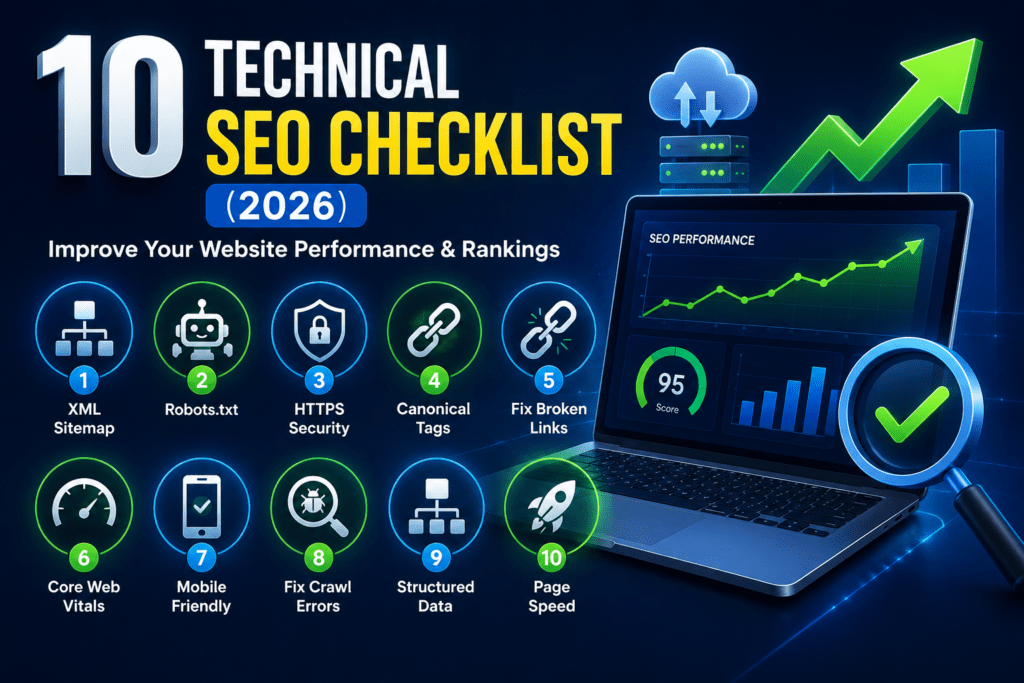
This checklist covers the ten most important technical SEO factors every website owner, blogger, SEO specialist, and digital marketer should implement.
1. XML Sitemap
An XML sitemap helps search engines discover and index your website pages efficiently. It acts as a roadmap for Google, ensuring that important pages are crawled regularly.
Best Practice:
- Keep your sitemap updated.
- Submit it in Google Search Console.
- Include only indexable URLs.
2. Robots.txt
The Robots.txt file tells search engine crawlers which pages they can or cannot access. A properly configured robots.txt file prevents unnecessary crawling while allowing important pages to be indexed.
Best Practice:
- Block duplicate or private pages.
- Never accidentally block your entire website.
3. HTTPS Security
Website security is a confirmed Google ranking factor. HTTPS encrypts data between users and your website, increasing trust and protecting sensitive information.
Benefits include:
- Better user trust
- Improved SEO
- Secure browsing experience
4. Canonical Tags
Duplicate content can confuse search engines. Canonical tags tell Google which version of a page should be considered the primary version.
They help:
- Prevent duplicate content issues
- Consolidate ranking signals
- Improve indexing accuracy
5. Fix Broken Links
Broken links create a poor user experience and waste crawl budget. Regularly audit your website to identify and repair broken internal and external links.
Recommended tools include:
- Google Search Console
- Screaming Frog
- Ahrefs
6. Optimize Core Web Vitals
Core Web Vitals measure real user experience and website performance.
The three key metrics are:
- Largest Contentful Paint (LCP): Loading speed
- Interaction to Next Paint (INP): Responsiveness
- Cumulative Layout Shift (CLS): Visual stability
Improving these metrics can positively impact both rankings and user satisfaction.
7. Mobile-Friendly Design
Google primarily uses mobile-first indexing, meaning it evaluates the mobile version of your website first.
Ensure your website:
- Uses responsive design
- Loads quickly on smartphones
- Has readable fonts
- Provides easy navigation
8. Fix Crawl Errors
Crawl errors prevent Google from accessing important pages.
Common issues include:
- 404 errors
- Redirect chains
- Server errors
- Blocked resources
Monitor crawl reports regularly using Google Search Console.
9. Add Structured Data
Structured data (Schema Markup) helps search engines better understand your content.
It can generate rich results such as:
- FAQs
- Reviews
- Breadcrumbs
- Product information
- Organization details
Rich snippets improve visibility and increase click-through rates.
10. Improve Page Speed
Fast-loading websites improve user experience and reduce bounce rates.
Speed optimization techniques include:
- Compress images
- Use WebP images
- Enable browser caching
- Minify CSS and JavaScript
- Use a Content Delivery Network (CDN)
A faster website benefits both visitors and search engine rankings.
Final Thoughts
Technical SEO is the backbone of long-term organic growth. While great content attracts visitors, technical optimization ensures that search engines can crawl, index, and rank your website efficiently.
By implementing these ten technical SEO best practices—XML sitemaps, robots.txt, HTTPS security, canonical tags, broken link fixes, Core Web Vitals optimization, mobile-friendly design, crawl error monitoring, structured data, and page speed improvements—you build a stronger, faster, and more search-friendly website.
Technical SEO should be reviewed regularly as your website grows. Consistent maintenance will help improve rankings, increase organic traffic, and deliver a better experience for both users and search engines.
FAQs
1. What is Technical SEO?
Technical SEO is the process of optimizing your website’s infrastructure so search engines can crawl, index, and rank your pages efficiently.
2. Why is Technical SEO important?
Without proper technical SEO, even high-quality content may struggle to rank because search engines may not access or understand your pages correctly.
3. What are Core Web Vitals?
Core Web Vitals are Google’s user experience metrics that measure loading speed (LCP), responsiveness (INP), and visual stability (CLS).
4. Which tool is best for Technical SEO audits?
Google Search Console, Screaming Frog, Ahrefs, Semrush, and PageSpeed Insights are among the most popular tools for technical SEO analysis.
5. How often should I perform a Technical SEO audit?
It’s recommended to perform a technical SEO audit every 3–6 months, or after major website updates, redesigns, or migrations.