In today’s competitive business world, the terms branding and marketing are often used interchangeably. While they work together, they are not the same. Branding is about creating your business identity and building trust, whereas marketing is about promoting your products or services to the right audience.
Whether you’re a startup founder, digital marketer, freelancer, or small business owner, understanding the difference between branding and marketing can help you create a stronger business strategy. In this guide, we’ll explore how branding and marketing differ, why both are essential, and how they work together to build a successful business.
What is Branding?
Branding is the process of creating a unique identity for your business. It is much more than a logo or a colour palette. Your brand represents your company’s personality, mission, values, and the emotions customers associate with your business.
Think about companies like Apple, Nike, or Coca-Cola. Their success isn’t just because of their products; it’s because people trust and remember their brands.
Branding helps answer one important question:
“Who are we as a business?”
A strong brand creates recognition, builds trust, and helps customers choose you over competitors.
What is Marketing?
Marketing is the strategy you use to promote your products or services and reach potential customers. It includes every activity that helps people discover your business and encourages them to make a purchase.
Marketing answers a different question:
“How do we reach our customers?”
Marketing includes many digital and traditional channels such as:
- Search Engine Optimization (SEO)
- Social Media Marketing
- Google Ads
- Email Marketing
- Content Marketing
- Video Marketing
- Influencer Marketing
- Paid Advertising
Unlike branding, marketing strategies change frequently based on trends, customer behaviour, and business goals.
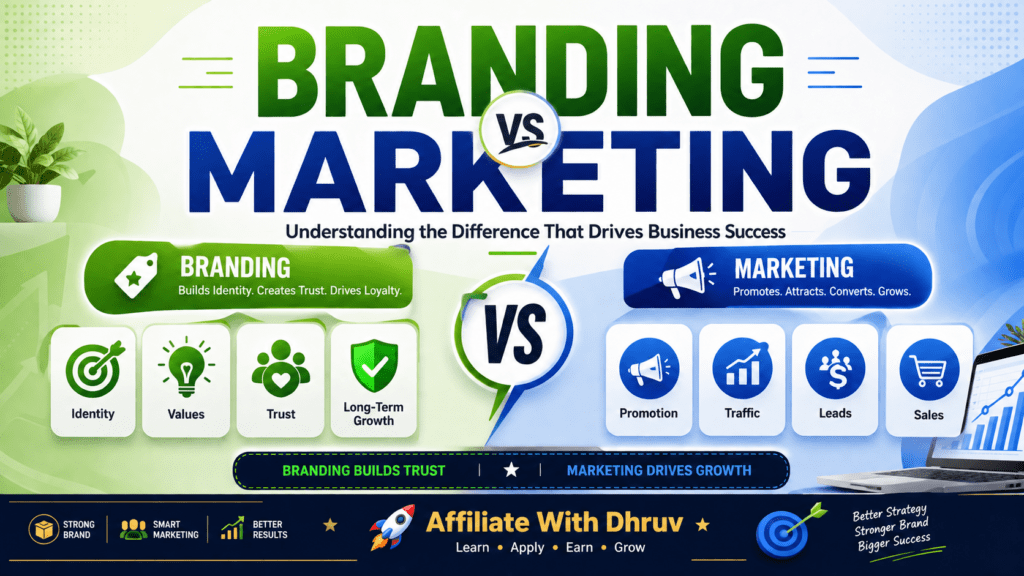
Branding vs Marketing: The Key Differences
Although branding and marketing complement each other, they serve different purposes.
Branding Comes First
Branding builds the foundation of your business. Before promoting your products, you need a clear identity that tells customers what your company stands for.
Without branding, marketing campaigns often appear inconsistent and fail to build trust.
Marketing Comes Second
Marketing takes your brand to the marketplace.
Once your brand identity is established, marketing helps attract customers through different promotional strategies.
Good marketing creates awareness, generates leads, and increases sales.
Branding Communicates Your Company Values
Your brand reflects your beliefs, mission, and long-term vision.
Customers don’t just buy products—they buy stories, values, and experiences.
Businesses with strong branding often create emotional connections with their audience.
Marketing Communicates Your Brand Message
Marketing focuses on sharing your message through different platforms.
Whether it’s a Facebook advertisement, an Instagram Reel, or a blog post, marketing ensures your brand reaches the right people at the right time.
Branding Answers “Why”
Branding explains why your company exists.
It tells customers your purpose beyond making sales.
For example, a fitness brand may exist to inspire healthier lifestyles rather than simply selling gym equipment.
Marketing Answers “How”
Marketing explains how you’ll reach your audience.
It includes campaigns, advertisements, SEO, email newsletters, and social media promotions that drive traffic and conversions.
Branding Creates Long-Term Loyalty
Branding focuses on building relationships.
When customers trust your business, they become repeat buyers and recommend your brand to others.
Strong brands create loyal communities rather than one-time customers.
Marketing Focuses on Short-Term Results
Marketing campaigns often aim to generate immediate results such as:
- Website traffic
- Product sales
- Leads
- App downloads
- Email subscribers
Marketing success is usually measured through performance metrics like clicks, conversions, and return on investment (ROI).
Why Branding is Important
A strong brand offers several long-term benefits.
Builds Trust
Customers naturally choose businesses they trust.
Professional branding increases confidence and credibility.
Improves Brand Recognition
Consistent colours, typography, messaging, and customer experience make your business memorable.
Creates Emotional Connections
People often remember how a brand makes them feel.
Emotional branding encourages stronger customer relationships.
Builds Customer Loyalty
Satisfied customers become loyal advocates who recommend your business to friends and family.
Why Marketing is Important
Even the strongest brand cannot grow without marketing.
Marketing helps your business:
- Reach new customers
- Increase online visibility
- Generate qualified leads
- Improve sales
- Grow brand awareness
- Measure campaign performance
Without marketing, even an excellent product may remain unnoticed.
How Branding and Marketing Work Together
Branding and marketing should never compete.
Instead, they support one another.
Imagine opening a digital marketing agency.
Your branding includes:
- Logo
- Website design
- Brand colours
- Company mission
- Tone of voice
- Customer experience
Your marketing includes:
- SEO
- Blog articles
- Pinterest Pins
- Google Ads
- Instagram content
- Email campaigns
Branding gives customers a reason to trust you.
Marketing gives customers a chance to find you.
Together, they create sustainable business growth.
Common Mistakes Businesses Make
Many businesses struggle because they misunderstand branding and marketing.
Some common mistakes include:
- Focusing only on advertisements without building a strong brand.
- Frequently changing logos, colours, and messaging.
- Ignoring customer experience.
- Expecting instant results from branding.
- Creating inconsistent content across different platforms.
Avoiding these mistakes helps build a stronger and more trustworthy business.
Best Practices for Success
If you want both your branding and marketing to succeed, follow these simple principles:
Define Your Brand Identity
Clearly understand your mission, vision, and values before promoting your business.
Know Your Audience
Research your ideal customers and understand their needs, interests, and problems.
Stay Consistent
Use the same visual identity, messaging, and tone across your website, social media, emails, and advertisements.
Create Valuable Content
Publish blogs, videos, tutorials, and social media posts that genuinely help your audience rather than only promoting products.
Measure Performance
Track your marketing campaigns using tools like Google Analytics, Google Search Console, and social media insights to identify what works best.
Final Thoughts
Branding and marketing are two essential pillars of business success. Branding builds your identity, establishes trust, and creates lasting customer relationships. Marketing promotes your brand, attracts new customers, and drives business growth.
The most successful businesses invest in both. A strong brand without marketing may never reach its audience, while marketing without branding often lacks direction and credibility.
If you want to build a business that people remember and choose, focus on creating a powerful brand first and then support it with smart, consistent marketing strategies.
Remember this simple rule:
Branding is about being remembered. Marketing is about being chosen. Together, they create a successful and sustainable business.
Frequently Asked Questions (FAQs)
1. What is the main difference between branding and marketing?
Branding is about creating your business identity, values, and reputation, while marketing is the process of promoting your products or services to attract customers and generate sales.
2. Which comes first: branding or marketing?
Branding comes first because it defines who your business is and what it stands for. Marketing then communicates that brand to the target audience through various promotional strategies.
3. Why is branding important for a business?
Branding helps build trust, improves recognition, creates emotional connections with customers, and encourages long-term customer loyalty.
4. Why is marketing important?
Marketing increases brand awareness, attracts potential customers, generates leads, boosts sales, and helps businesses measure campaign performance through analytics.
5. Can a business succeed with marketing but without branding?
A business may achieve short-term sales through marketing, but without strong branding, it can struggle to build customer trust, loyalty, and long-term success.